

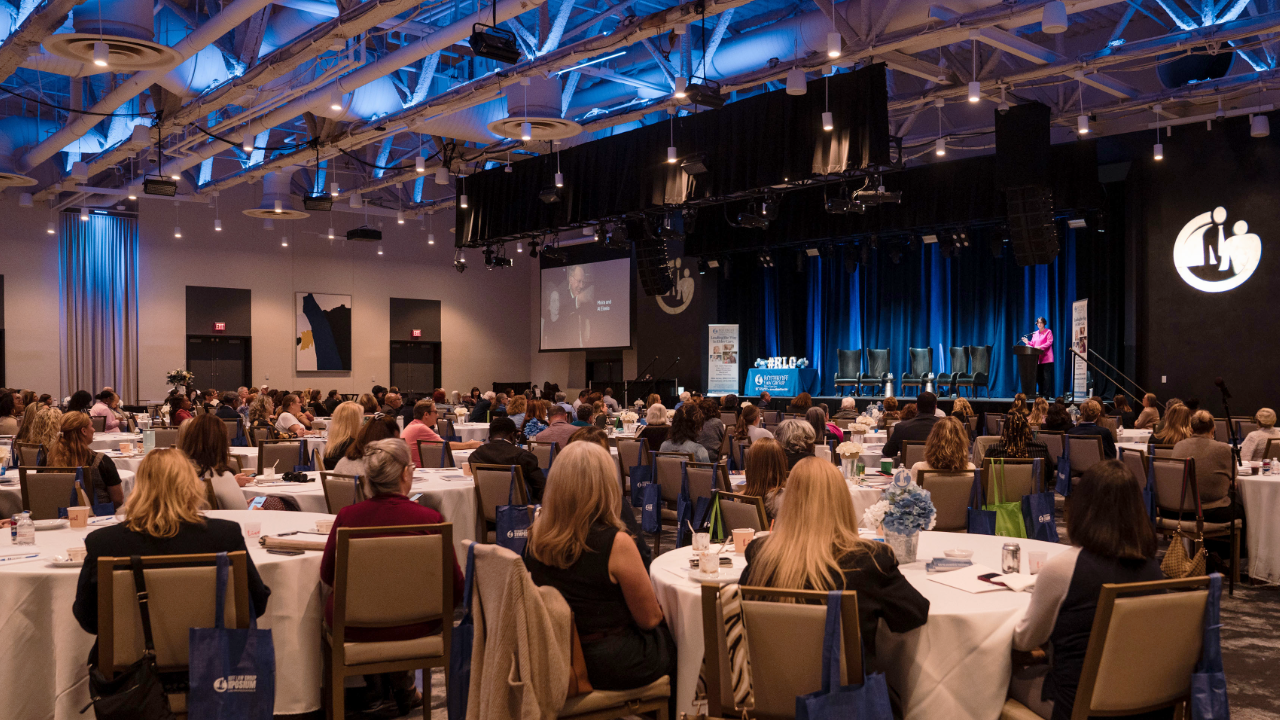
The 9th Annual Rothkoff Elder Care Symposium was held on Thursday, October 15, 2026, at Live! Casino & Hotel Philadelphia. Our largest attendance ever of over 350 elder care advocates and caregivers spent a full day of learning and sharing ideas of how to improve the services offered to older adults and caregivers. We thank all the sponsors, exhibitors, attendees, and speakers for making such a great, meaningful day possible. We want to share the excerpts of the Symposium’s opening remarks by Jerry Rothkoff. A full recap of the Symposium will be forthcoming.
“Today, our theme is Elevating Voices in Elder Care. We will spend the first part of the day addressing the caregiver voices with the Keynote address by award-winning journalist Kitty Eisele, followed by a panel discussion moderated by Kitty. We will have the Caregiver Award presentation before we break for lunch.
After lunch, Dr. Christopher Kerr will join us for a discussion on patient end-of-life experiences. Following Dr. Kerr, we will have our breakout sessions. We will end the day with a session by Lisa Pahl about conversations at end-of-life.
Elevating Voices in Elder Care. Who are the voices in elder care this day is meant to elevate? Certainly, those in this room including the voice of the older adult, the voice of family and friends, the voice of caregivers, the voice of health care professionals and advocates, and the voice of the community.
I want to add an additional, equally important voice who is not represented today – the voice of government. Why government? Government helps determine whether quality elder care is accessible, affordable, safe, and equitable. So, what is the role of government?
Let me use the Nordic countries—Finland, Denmark, Iceland, Norway, and Sweden as an example of the role of government. These Nordic countries are constantly ranked atop the highest positions in global happiness rankings. My wife, Erica, and I traveled to Finland, Sweden, and Denmark in July 2026 as part of a delegation from the National Academy of Elder Law Attorneys (NAELA), with the hope of discovering what makes people in these countries so satisfied with their lives.
We learned the answer is more complicated than simply saying that Nordic people are wealthier. Happiness in the Nordic region appears to be connected to a combination of economic security, social trust, strong institutions, community, personal freedom, and a healthy balance between work and private life.
One of the most important features of Nordic societies is the welfare state. Governments provide extensive public services, including healthcare, education, unemployment support, parental benefits, and pensions. These systems can reduce the fear associated with illness, unemployment, or financial hardship. People may feel more confident knowing that a temporary setback is less likely to destroy their quality of life.
As an example, we visited the new main public library in the city of Helsinki, Finland. It is a public library like no other I have ever been to. There are sewing machines available for public use, sports equipment for rent, 3D printers, podcast recording studios, music studios with music equipment. In creating the services for its citizens, the city government of Helsinki surveyed its residents as to what types of services you want in your public library. The government listened to the voices of its citizens. Strong public institutions can provide a foundation of security that contributes to overall life satisfaction.
Imagine if CMS asked Medicare beneficiaries what they would like Medicare to cover? Maybe things like dental care, home care, care coordination would be top of the list. Imagine if assisted living or nursing home owners and operators asked residents or prospective residents what type of services they would like to have. Maybe things like more open outdoor space, more privacy, more homelike settings would come to mind.
Trust is another important part of the Nordic model. People tend to have relatively high levels of trust in other citizens and public institutions. When people believe that others will behave fairly—and that government institutions generally function properly—everyday life can become less stressful.
It is important not to overemphasize what happiness means. High happiness rankings do not mean that everyone living there is happy all the time. Nordic societies face problems like every other part of the world. Therefore, the Nordic experience should not be understood as a formula for perfect happiness. Instead, it demonstrates how social conditions and government can make a satisfying life more achievable for large numbers of people.
The Nordic countries cannot simply be copied. Their institutions developed over many decades and are shaped by their particular histories, cultures, and political systems. Nevertheless, their experience offers several useful lessons.
Perhaps the most important lesson is that happiness is not simply something individuals must pursue on their own. The society around us, including government involvement or lack of it, can either make well-being easier or harder to achieve. The Nordic experience suggests that when people feel secure, trust one another, have meaningful relationships, and have time to enjoy life, prosperity can become more than economic wealth—it can become a foundation for a happier society.
The Nordic experience suggests that government can play a constructive role in protecting the elders’ voice not by deciding everything for older people, but by creating the conditions in which older people can continue to decide for themselves.
As populations age around the world, whether the Nordic countries or the United States, the countries that succeed will not necessarily be those that build the most sophisticated institutions. They will be those that remember why the institutions exist in the first place.
Perhaps the first step toward better elder care is also the simplest:
Listen to the people we are trying to serve. Listen to their voices. We will do so today. Let us elevate voices in elder care.
I hope you all enjoy this wonderful day of sharing and learning.”
View a video recap of all of the day on our Facebook page here.
